Having grown up in a middle-class household, it was common for us to reuse the things which were previously used or owned by our siblings or cousins. From toys to clothes, books to school bags, almost everything was being handed down to younger siblings or cousins.
Having our birthdays in the same month, I and my siblings did not have the privilege of getting separate gifts for our birthdays. So, sharing came naturally to us. In fact, a combined gift gave us the advantage to choose a more expensive toy, game, or book which we could well co-own with our siblings. We grew up in simpler times with little peer pressure to own the latest brands and objects. Looking back, I realise that these practices helped in strengthening family relationships, were economical, and contributed to sustainable living.
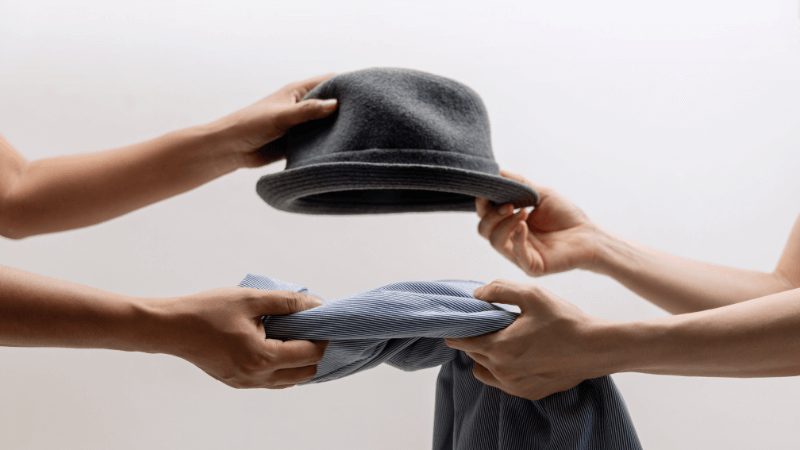
On Wednesday, May 15th, 2024, United Nations is celebrating 30th anniversary of the International Year of the Family, with focus on the theme ‘Families and Climate Change’.
This International Day of Families, let us revisit a few of these and more sustainable practices that are relevant even in present time.
Creating awareness of the effects of climate change on families and the essential role that households can play in taking action against it is the goal of the 2024 International Day of Families. We can encourage climate action with education, information access, training, and community involvement through family and community projects.
The family is our closest and smallest sphere of influence. If every member of the family adopts choices for sustainable living, the impact can be manifold. Infact the positive effect can influence the future generations as a great deal of our household practices and behaviours are taught to us by our families.
I recently came across a fascinating representation, The Buyerarchy of Needs, by Sarah Lazarovic.
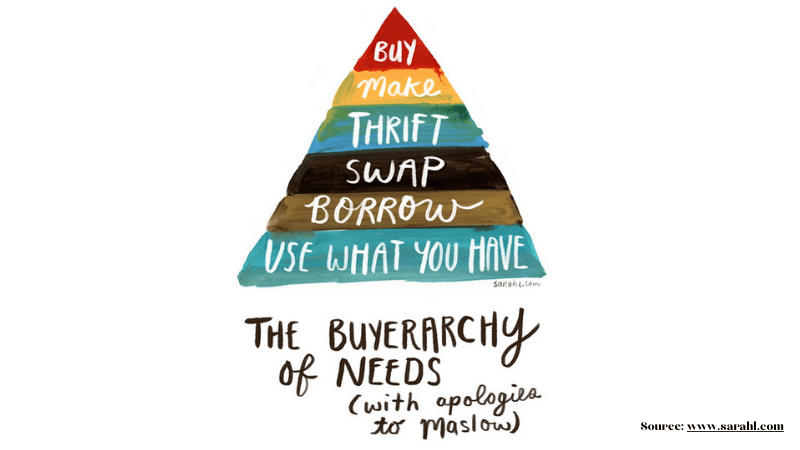
I have found this representation extremely impressive and for those of us who are wondering from where to begin their journey of sustainable practices, the base of the pyramid could be a good place. So, the next time you begin a project, it may be a favourable idea to sift through the material you already have rather than rushing to the market to buy stuff or ordering material online.
A few eco-friendly practices that many households use include reusing old towels as mops, sheets, and old clothes as cleaning rags. Reusing packaging boxes and carrying a reusable cloth shopping bag in your purse and vehicle are some of the other sustainable practices we can adopt. Also buying thoughtfully, mindfully, and only when necessary are healthy habits for sustainable living.
Do share with us in the comments below, what are the things you have adopted for a sustainable living.
Very interesting read. Thank you for sharing.
I am glad you found it interesting Suneela.
The article took me back to my childhood days and how we as a family practiced sustainability , we also often used old towels to mop floors and we went for picnics where we carried our own picnic baskets and we used cloth napkins instead of paper napkins.
Some sustainable practices which i follow is that I buy eatables / grocery in less quantity but of good quality , try to first consume it and then only buy again. I also avoid buying items with too much of packaging material.
Thank you for sharing Sapna
Thank you for sharing your memories and sustainable practices! It’s heartening to know how these habits from childhood have carried forward into your daily life. Every small step, like using cloth napkins and being mindful of packaging, makes a big difference. Keep up the great work!